

How can We Protect Water from Chemicals?
Date
18 of July, 2025
Author
PROQUINSA
Reading
15 min
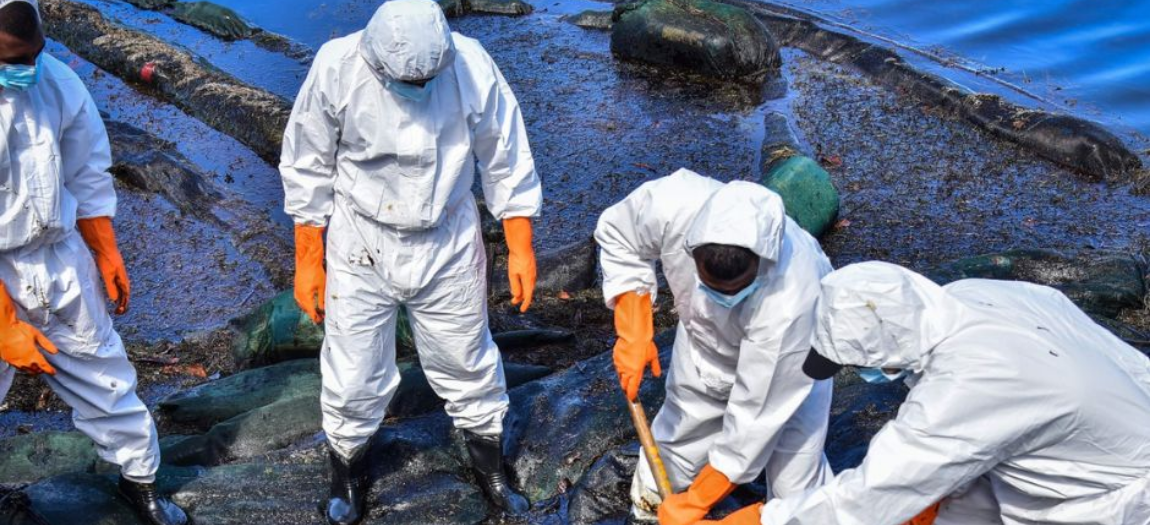
“Environmental damage and climate change are leading the water access crisis for the world’s population. The condition of vegetation, seas, and rivers exacerbates flooding, drought, and water pollution. The more the ecosystem degrades, the more difficult it is to ensure access to safe drinking water for the entire world’s population.” – The United Nations, 2018.
We face an alarming state where the most pressing question is: how to rebalance the water cycle and improve the health and habitability of our planet? Or, in our subject matter, how to protect water from chemicals?
The background
One of the most pressing issues facing our planet is reducing water pollution. In addition, one of the biggest challenges facing humanity in the near future will be the scarcity of drinking water due to climate change and prolonged droughts. These challenges, coupled with high levels of contamination of water sources, are resulting in less safe water available for consumption.
For decades, human activity has been causing environmental impacts that, if we do not put an end to them as soon as possible, will be irreversible.
Various chemical industries are essential to human life, so it is important to implement measures to improve water efficiency and prevent the discharge of products that contaminate it.
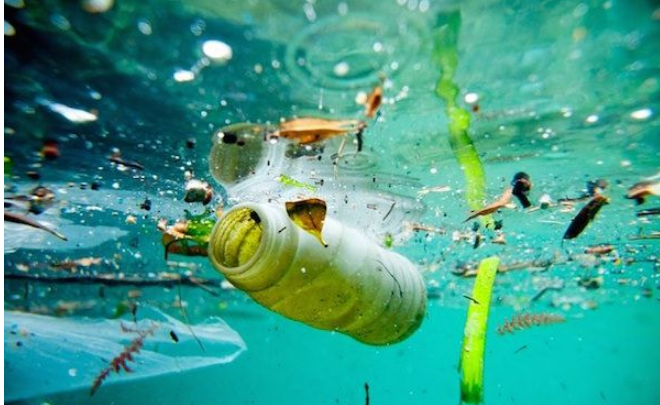
The Sandoz disaster
A notable example of what we must avoid is what happened in 1986. In the early hours of November 1, a fire broke out in a warehouse belonging to the chemical company Sandoz in the Schweizerhalle industrial area outside Basel, Switzerland. Approximately 1,351 tons of pesticides and agrochemicals were burned.
This incident resulted in a spill of 30 tons of insecticides, pesticides, dyes, and mercury. These substances were mixed with 15,000 m³ of water used to extinguish the fire, which was eventually discharged into the Rhine River. The environmental disaster warning system for the five countries along the Rhine failed. While Sandoz did not report the spillage correctly, it later took full responsibility for the incident.
There were also problems informing the population on the part of the authorities, since the warning was given in German, a language not all affected people understood.
The accident affected the Rhine River: it dyed it red, killed thousands of fish, and covered the city with a pungent smoke. It was one of the worst environmental disasters in Europe and made headlines wordwide.
Although there was no loss of life, the environmental consequences were catastrophic: pollution reached 500 km downstream; approximately 500,000 fish died; in Germany, more than 150,000 eels were found dead; and in Switzerland, fish and insects became temporarily extinct. In addition, 40 water treatment plants located along the Rhine took preventive measures to stop or reduce water uptake.
Only 20 years later, the Rhine was again declared a “living river” by the International Commission for the Protection of the Rhine in 2006.

As for responsibility for the disaster, only two firefighters were charged with polluting the river as a result of their firefighting actions, and Sandoz management was not held liable. However, the company paid 43 million francs ($49 million at the time) in compensation to Switzerland, France, Germany, and the Netherlands.
More than 30 years have passed since the Sandoz accident, and there is still work to be done. In all states, efforts must continue relentlessly, including continuous monitoring of water quality and the implementation of pending measures.
So, what measures can industries take?
Retention basins
A retention basin is one of the viable solutions for containing spills within so-called “containment systems”. That is, they are devices or elements designed to retain hazardous chemicals that may be dispersed due to leakage failures in other parts of the facility. They include holding rooms, containment basins, containment tanks, sumps, pipes, vessels, or surfaces where hazardous chemicals are retained or from which they are evacuated.
These containment vessels are available in different materials: steel (for flammable products), stainless steel (for corrosive materials), and polyethylene (for acids, bases, and alkalis).
Products for spill detection and management
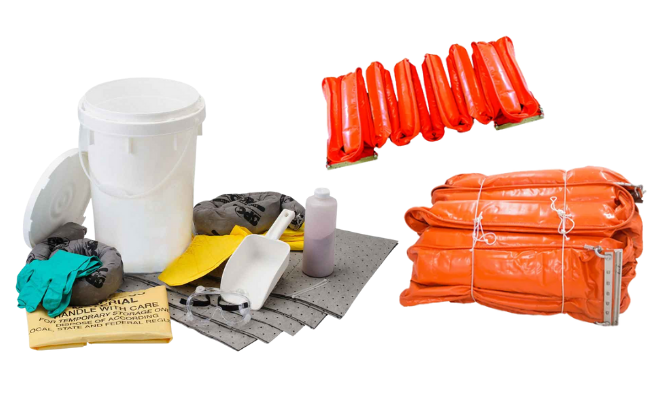
Industries can implement the following products to prevent and contain accidents:
- Spill detectors and alarms
- Sealing plugs
- Containment barriers
- Sealing mastics
- Pipe sealants
- Sealants and plugs
- Oil containment barriers
- Oil containment booms
- Safety drums
- Water-filled door barriers
Absorbents for spills
Absorbents are auxiliary materials used for spill control to absorb small amounts of oil and chemical products.
There are mainly two types of absorbents:
1. Cloth absorbents (washable and reusable).
They include:
- Pads
- Sheets
- Rolls
- Blankets
- Pillows
- Floating sticks
2. Granular absorbents (disposable)
Pueden estar hechos de:
- Wood, wood chips, or fiber
- Peat
- Sawdust
- Clay
- Cork
- Plastic
- Pumice stone
- Rice and cotton husks
Specificity according to the type of spill
It is important to remember that absorbents also have degrees of specialization according to the type of spill to be treated:
- Oil type: Absorbs all types of oils, gasoline, and hydrocarbon-based substances, but does not absorb water.
- Universal type: Handles common spill emergencies.
- Special type: Absorbs corrosive and hazardous liquids, such as acids, bases, and alkalis.
Our commitment to sustainability
Protecting our water sources requires a combination of prevention, monitoring, and responsible chemical management. On this path, PROQUINSA continuously works to offer safe solutions, specialized advice, and products designed to minimize the environmental impact of industrial operations. Its commitment is to accompany companies in implementing more sustainable practices and adopting technologies that help preserve one of the planet’s most vital resources: water.
